Sunday, 17 May 2015

No more cross-border visas as UN hails positive resumption of Cyprus talks

L-R: Nicos Anastasiades, Espen Barth Eide, and Mustafa Akıncı. Photo: UN
NEWS/TRNC

The negotiations to reunite Cyprus resumed on Friday on an air of positivity as the two leaders agreed on a number of confidence-building measures (CMBs). Among them was a decision by the Turkish Cypriot side to scrap visas at the Green Line checkpoints.

From midnight last night, 16 May, people crossing to and from the Turkish Republic of Northern Cyprus were no longer required to get a stamp on their travel documents or temporary travel permits. Instead, they will just need to show their travel documents or Cypriot identity cards to pass through.

“Queues at the crossings will be a thing of the past”

The issue had been a sticking point for many Greek Cypriots who do not recognise the TRNC and had refused to cross the border due to the visa requirement. Others had complained about the length of time needed for the TRNC police to inspect and stamp each individual’s travel documents, creating hold-ups at the borders.

Ledra Palace checkpoint in Nicosia
The move was warmly welcomed by many including the Turkish Cypriot Tourism and Travel Agents Association. Their head Orhan Tolun told an Anadolu Ajans reporter that “queues at the crossings will be a thing of the past”, helping to speed up the flow and number of people crossing between the two sides.

The borders were opened on 23 April 2003 following decades of the two communities living apart after the 1974 War, which had led to the creation of two ethnically-split sides in Cyprus.

CMBs for anti-personnel minefields and Muslim property in South Cyprus

Other important developments included the Greek Cypriot side handing over co-ordinates detailing where 28 minefields were located in the foothills of the Five Finger Mountains. These had been planted by the Greek Cypriot military in 1974.

This and further CBMs had been announced by the Greek Cypriot side two days after the conclusion of the TRNC Presidential elections in April. They included transferring the administrative control of Muslim places of worship in the south to Evkaf – the Turkish Cypriot Islamic Trust located in North Cyprus. Turkish speakers would also be hired to assist Turkish Cypriots requiring government services in the South, helping to fulfil a long-overdue constitutional requirement that both Cypriot official languages – Greek and Turkish – are used in the Republic of Cyprus.

The resumed Cyprus talks – the first between Greek Cypriot leader Nicos Anastasiades and newly-elected TRNC President Mustafa Akıncı – took place at Ledra Palace on Friday 15 May. They were conducted under the auspices of the United Nations and supervised by the UN Secretary-General’s Cyprus Advisor Espen Barth Eide, who afterwards wrote on Twitter: “Excellent atmosphere in the first formal leader's mtg between @MustafaAkinci_1 and @AnastasiadesCY. Focusing on their joint vision 4 #Cyprus [sic]”.

The two Cypriot leaders have agreed to meet at least twice a month in what will be a ‘leader-led process’ to reunify the island, building on their first formal meeting on Friday where they shared their vision for a united federal Cyprus.

Akıncı appoints Özdil Nami as his Chief Negotiator

One of the first actions the new Turkish Cypriot leader Mustafa Akıncı took was to appoint Özdil Nami as his new Chief Negotiator. Nami, an MP for the Republican Turkish Party (CTP) and the TRNC’s Foreign Minister, has since resigned from his government post to take up the role.

Nami took over the reigns from Ergün Olgun on 4 May. Olgun, a former undersecretary to TRNC Founding President Rauf Denktaş, was one of the architects of the 2004 UN Annan Plan and had more recently served as the Turkish Cypriot Chief
 Negotiator for President Derviş Eroğlu, who lost the elections in April.

Born in 1967, Nami is widely respected as a progressive force in Turkish Cypriot politics. A business graduate from the Boğaziçi University and with a Masters degree in Finance from the University of California, he has cut his teeth in Cyprus politics through a variety of positions.

Between 1997 and 2000, Nami served as a Presidential advisor to Rauf Denktaş. He has headed up a Turkish Cypriot business group, and between 2008 and 2010, he was part of President Talat’s negotiating team. A CTP MP for Lefkoşa since 2003, Nami was selected to represent the Turkish Cypriot side at the European Parliament since 2005. Following the country’s general elections in 2013, he was made the TRNC Minister of Foreign Affairs.

In a statement announcing Nami’s new appointment, President Akıncı said: “Along with his [Nami’s] belief in a peace deal and an EU vision, I believe his experience and skills will enable him to make a serious contribution to the [UN] negotiations.”

Saturday, 16 May 2015

Number of BME MPs up, but still no British Turks in office

L-R: Kate Osamor MP, Isabel Sigmac and Alan Mak MP
NEWS/UK

While none of the four Parliamentary candidates of Turkish heritage were successful in their bid to become a British MP in last week’s General Election, a record number of politicians from Black and Ethnic Minority (BME) backgrounds have been elected. There are now 41 BME MPs, up from 25 in 2010.

Ten of the 18 new MPs are female. Labour has eight new BME MPs, with seven from the Conservatives, and one from the Scottish National Party.  Alan Mak makes history by becoming the first MP of Chinese origin to sit in the House of Commons, having won Havant for the Conservatives. Labour’s Kate Osamor, of Nigerian heritage, won in Edmonton, North London, where there is a huge Turkish community, with her vote surging to over 25,000 – up by nearly 8% on the 2010 elections.

More BMEs voted in 2015 General Election

Although there was minimal change in voter turnout for this General Election, up one percent to 66% from five years ago, initial analysis by political lobby group Operation Black Vote (OBC) suggests there was a steeper increase in the number of BME voters in 2015, which bucked the national trend.

According to OBV, a number of ethnically diverse constituencies saw marked increases in voter turnouts: East Ham was up by five per cent; Brent North went from 62% in 2010 to 63.5%; Ealing North was up to 65.7% from 63% in 2010; and Birmingham Ladywood – where Isabel Sigmac was standing – saw turnout shoot up from 48% five years ago to 52.7% in 2015.

While coming second in a Labour stronghold, Sigmac, originally from Turkey, helped increase both the share and number of votes for her Tory Party. Similarly, Labour’s Ibby Mehmet, of Turkish Cypriot heritage, secured an increase in the number of votes in Old Sidcup and Bexley – a safe Tory seat.

Former footballer Sol Campbell ‘whites up' for OBV's 2015 General Election campaign aimed at BMEs
Earlier this year, OBV mounted a major campaign to encourage more British BMEs to vote. They undertook a nationwide tour on a bus, reaching out to diverse communities to help them to register to vote. They were supported by a bold and much publicised poster campaign created by Saatchi & Saatchi that featured black personalities such as David Harewood and Sol Campbell ‘whiting up’, pushing the message to BMEs that they need to engage in the political process if they want to have influence on issues that matter to them.

British Turks getting more politically active

Gönül Daniels (Conservative), Turhan Özen (Liberal Democrat), Isabel Sigmac, and Ibby Mehmet were all selected to fight seats where their main opponent commanded huge local support. While they were not able to overturn such large majorities, their involvement, publicised extensively in the British Turkish press, helped galvanise wider interest in these elections.

There is an ongoing trend of British Turks becoming more politically active. In May last year, a record number of candidates from Turkish, Turkish Cypriot and Turkish Kurdish backgrounds stood in the Local Elections. Of the 51 candidates, 32 won, virtually doubling the number of British Turkish councillors, which had stood at 17 in 2010.

Baroness Meral Ece-Hussein OBE is currently the only British Parliamentarian of Turkish heritage in the UK Parliament. She was appointed a life peer in 2010.

Friday, 15 May 2015

Exclusive interview: Ata Demirer calls Demet Akbağ "fearless", says she will do anything for comedy

CULTURE / FILM

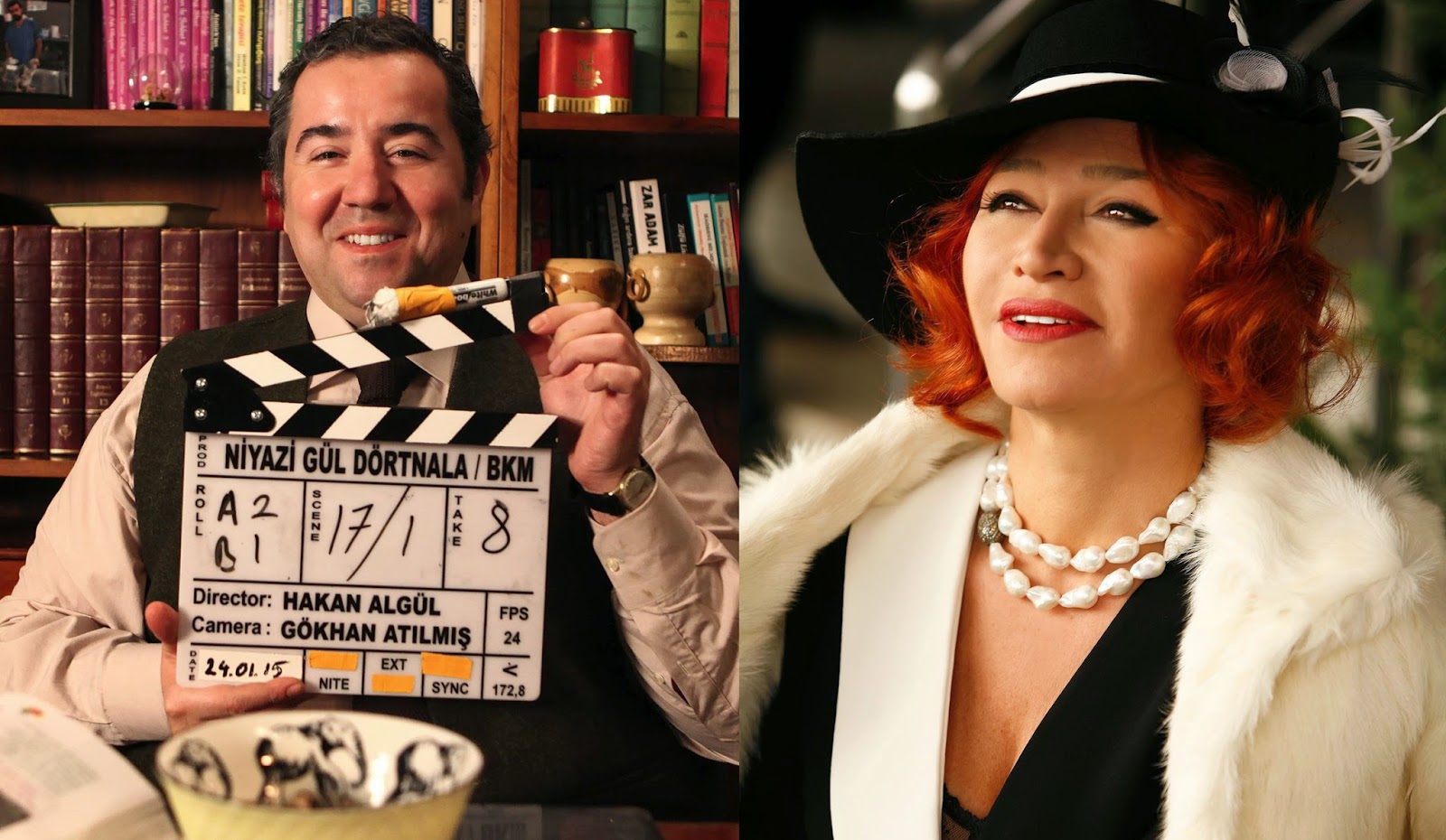
The on-screen pairing of Ata Demirer and Demet Akbağ spells box office gold in Turkey. The duo first worked together in the 2004 hit Vizontele Tuuba. Since then, 42-year-old Demirer, a stand-up comedian-turned-scriptwriter and actor, and actress 55-year-old Akbağ have appeared in five more motion pictures, among them some of the country’s biggest-grossing movies, including comedy hit series Eyyvah, Eyyvah.

Eyyvah Eyyvah 2 was Turkey’s biggest film in 2011, with its predecessor and successor scoring top three annual box office listings. To date, the series has generated receipts in excess of $45 million for the film’s stars, its director Hakan Algül and their studio backer BKM.

That winning combination is back for new comedy Niyazi Gül Dört Nala (Niyazi Gül, The Galloping Vet), which opened the London Turkish Film Festival last week and goes on general release in Britain today.

We caught up with the two lead stars on the red carpet at the film’s world premiere in Istanbul.

Tell us about your new movie Niyazi Gül Dört Nala

Ata Demirer (AD): It’s based on a TV character I created. In the full-length feature film, we see a chapter in the life of Niyazi Gül, a veterinary surgeon who lives in Izmir and teaches university students, while researching into a formula, a new medicine for animals. It’s during this research that he gets caught up in all sorts of dramas.
Demet Akbağ (DA): my character Sultan Şahmerdan is a wealthy landowner with a farm and horses. She’s been around. She crosses swords with an old flame, Rıza Kabakoz, following a horse-racing bet, resulting in her meeting with Niyazi Gül and the plot thickens from there.

What inspired you for this movie - have you had experience with animals or vets?

AD: Yes, with animals. And, as an animal lover, I’ve also been around vets all my life, so I’ve been able to observe their work.
 
A challenging scene with geese, but Ata Demirer says: "Working with humans isn’t that easy either!"
Working with animals wasn’t easy, we’re sure: any memorable moments?

AD: Working with humans isn’t that easy either! If you know how to handle animals, they are not at all difficult to work with.
DA: Obviously animals play a big part in the movie. One of the most challenging scenes is when the geese chase after us. That was hard work. It helped doing the filming on a beautiful sunny day in Izmir.

This is the sixth time you’ve worked together. How does it feel and what do you most admire about each other?

AD: I feel a very high level of happiness [working with Demet]. The thing I love the most about her is she will do anything for comedy. She is fearless.
DA: [Ata] has a very entertaining, very funny personality. We have a lot of fun off-camera, which no doubt you will see when the DVD is released. I love Ata as a person, friend, brother and a colleague. It’s always a pleasure working with him and our friendship has really grown since the first Eyyvah, Eyyvah. It’s a big sister-brother relationship – he was raised as a good young man! And as long as we enjoy it, I’m sure we’ll work together on many more projects.
 
Ata Demirer & Demet Akbağ chalked up a series of box office hits in their 'Eyyvah, Eyyvah' trilogy
Who’s influenced you the most, who do you admire outside Turkey?

AD: I love watching Ben Stiller. Also Woody Allen, Al Pacino, Marlon Brando.

Action-hero films are all the rage in 2015. Would you ever play an action-hero?

AD: No. I’m a comedian.

How do you view the Turkish film industry?

DA: There’s lots of comedy, which brings big box office success. It upsets me that serious dramas with good storylines struggle [to be a commercial success] in Turkey. I’d like to see more of these types of films made. But overall, I’m really pleased about the growing interest in Turkish cinema.

Many older actresses in the UK and USA complain about the lack of quality roles. Is it also true for Turkey?

DA: Yes. We actresses also share the same complaints as Hollywood women. It’s the law of nature. It’s up to us women to write more and better roles for women, and things aren’t going to change until more of us pick up paper and pen. It’s not surprising the sector is dominated by men though: there are many more male scriptwriters and actors than women, so it’s natural they will write roles and create characters based on what they are most familiar with.

What do you love best about London?

DA: Hyde Park
AD: London’s famous for its pubs. Irish pubs, London pub. Pub, pub!

Niyazi Gül, The Galloping Vet goes on general release in select cinemas across London from Friday 15 May.

RELATED ARTICLES:


Film review: Niyazi Gül, The Galloping Vet

Professor Niyazi Gül (Ata Demirer) with his assistant Hediye (Şebnem Bozoklu)
CULTURE / FILM

By İpek Özerim

This new Turkish comedy centres on the life of veterinary surgeon Professor Niyazi Gül (Ata Demirer), a quiet and serious fellow. A lecturer at a university veterinary department, Gül devotes his spare time to researching for an elixir for animals. His mission was set by his grandfather, who died before he could tell young Niyazi the final ingredient.

Niyazi is aided by his cleaner-cum-research assistant Hediye (Şebnem Bozoklu), a colourful character who has no qualms about putting her boss in his place. Together, they offer up a whole manner of eccentricities: Hediye teaches the parrot to sing arabesque, while Niyazi tests various household vegetables hoping one of them will be the vital ingredient that his magic potion is missing.

The mad professor seems oblivious to Hediye’s growing crush on him, and any chance for romance seems curtailed when two crazy old lovers, Sultan (Demet Akbağ) and Rıza (Levent Ülgen), tumble into Professor Gül’s world, each desperate to utilise his expertise to win a horse racing bet.

There is more than a nod to classic Yeşilçam comedies here, and the laughs come in thick and fast throughout this action-packed comedy adventure. For British Turks, there’s the added hilarity of English words randomly used for heightened effect during the banter between Sultan and her man-servant Süleyman (Kevork Malikyan, who’s appeared in British TV sitcoms like Mind Your Language). 


Levent Ülgen plays a Turkish mafia-baba
that's head-over-heels in love with Sultan
The film is bound together brilliantly by Akbağ, who is simply sensational every time she hits the screen. Her flamboyant style is the perfect foil for Demirer’s deadpan character and her on-screen stereotypical Turkish gangster lover Rıza, played by Ülgen. Bozoklu holds her own as Hediye. In its quest for laughs the film does lose the plot, literally, in the final 20 minutes with an absurd twist that descends into total farce.

Still, having gone in at number one in the Turkish Box Office, BKM won’t be remotely worried the film hasn’t won over the movie pundits. As Demirer and Akbağ chalk up another huge comedy hit, the bets are on that this is the first of a new film series for them. 

Niyazi Gül, The Galloping Vet goes on general release in select cinemas across London from Friday 15 May. In Turkish with English subtitles. Running time: 106 minutes.


RELATED ARTICLES:


Tuesday, 12 May 2015

Şaban ‘Shabba’ Kazim in Eurovision special

CULTURE / COMEDY

Şaban will be flying the flag for Turks during this Eurovision comedy special at Funny Cunths – a free weekly stand-up night. Since the 31-year-old took the Comedy Store King Gong award in December, he’s had a host of bookings, his hilarious deadpan stories about his Turkish roots proving a big hit with audiences. We may no longer be the butt of Eurovision jokes after winning in 2003 with Sertab Erener, but national pride is still at stake with comedians representing countries, music and silly voting. Go support!

Performance date: Tuesday 19 May 2015
Address:  The Royal George, 133 Charing Cross Road, Soho, London WC2H 0EA
Start time:  7.30pm
Entry: FREE
More info: nearest tube - Tottenham Court Road. cunth.co.uk


Monday, 11 May 2015

1915 remembered in Turkey

President Erdoğan & Prince Charles pay their respects at Çanakkale on 24 April 2015. Photo: RT.com
NEWS/TURKEY

Turkey commemorated two devastating legacies of World War One – the Gallipoli Campaign and the massacres of Turkish Armenians – in a series of events on 24th April.

President Recep Tayyip Erdoğan hosted Prince Charles and 21 heads of state, including the prime ministers of Australia and New Zealand, Tony Abbott and John Key, in Çanakkale to mark the centenary of the Gallipoli landings, which claimed 140,000 lives. Wreaths were laid at the Cape Helles memorial, a towering stone obelisk on the southernmost tip of the peninsula, with Mehmet Görmez, the head of the Directorate for Religious Affairs (Diyanet), opening the hour‑long service with prayers.

The following morning, Abbott and Key attended the annual Dawn Service at Anzac Cove with an estimated 10,000 Australians and New Zealanders who had travelled to Turkey to honour the ANZAC soldiers that had landed in Gallipoli on 25th April 1915, many never to return.

Also on 24th April, Armenians from around the globe journeyed to Istanbul to commemorate the centenary of the mass killings of their ancestors by the Ottomans. Turkey refuses to accept the events as ‘genocide’, claiming the deaths came during a massive loss of life for all sides during World War I. Academics also continue to dispute the total numbers killed. However, the AKP government has gone further towards reconciliation than any other. 

Historic moment: EU Affairs Minister Volkan Bozkır attends commemoration service for murdered Armenians
It has organised conferences to reveal the truth of what happened in 1915, it has tried to increase trade with Armenia, and even mooted an historic protocol between the two countries; while last year Erdoğan issued an unprecedented message of regret to the Armenian nation.

Chief among the 2015 events organised by Turkish and foreign non-governmental organisations in Turkey was a special service by the Turkish Armenian Patriarchate at the Mother Mary Church in Kumkapı. It was attended by Turkey's EU Affairs Minister Volkan Bozkır – the first time any Turkish government official has participated in a commemoration event for Armenians. Messages of condolence from the Turkish President and Prime Minister Davutoğlu were also read out.

Other events took place in Taksim Square and at Haydarpaşa train station, attended by thousands of people. Several Turkish newspapers dedicated their front covers to the Armenian commemorations including Cumhuriyet, a centre-left broadsheet, which ran the headline: “Never again”. It featured an extensive interview with murdered newspaper editor Hrant Dink’s widow Rakel, who described her family’s difficult experiences as Armenians in Turkey during and after War War I. 

Armenian commemoration vigil in Istanbul

Saturday, 9 May 2015

More British politicians back the campaign to re-instate Turkish exams

L-R: Gonul Daniels, Nick de Bois, Boris Johnson
NEWS/UK

By Boulent Mustafa & İpek Özerim

A campaign to save Turkish exams in Britain has secured widespread backing. First brought to the public’s attention by Londra Gazete in March, teachers, students and parents in the community were astonished by national examination board OCR’s decision to abolish Turkish exams. As things stands, no secondary school will be able to offer Turkish GCSE and A Levels from 2017.

Since breaking the news, Londra Gazete has launched a community-backed campaign to reinstate Turkish exams. A petition on Change.org has attracted just over 2,500 signatures and there has been universal support from Britain’s three big political parties.

On 24 March, Nick de Bois (then Enfield North MP) led a debate in Parliament about lesser taught minority languages in Britain and the threat they were under. The heightened awareness has resulted in many other high profile politicians throwing their weight behind the Save Our Turkish Exams campaign, including Mayor of London Boris Johnson (himself of Turkish heritage), former Lib Dem MP Lynne Featherstone, and Labour shadow Business Secretary Chukka Ummuna and Catherine West, the new Labour MP for Hornsey and Wood Green.

Labour was the first party to pledge to reinstate the exams if they formed the next government. Shadow education secretary Tristram Hunt called the decision to scrap Turkish “short-sighted”. The commitment has been met by the Conservatives, while the Lib Dems have said they respect the independence of examination boards, but if elected, would meet with the boards to impress upon them the need to maintain Turkish and other diverse languages.

Catherine West and Chukka Ummuna
The shock decision by OCR to scrap Turkish came even after the British Council ranked it as the 8th most important language to learn. The exam board claims there is insufficient demand for this and a host of other languages, including Bengali, Guajarati and Polish, which are also under threat of being scrapped. Yet their own stats from June 2014 show more students took Turkish ‘A’ Level than either German or Spanish (618 for Turkish, 586 Spanish and 398 for German), suggesting that other factors were involved in their decision.

OCR’s decision will deprive Turkish-speaking teenagers in Britain of a vital bond to their cultural roots. While other exams in Turkish exist, these are aimed at native speakers whose standard of Turkish is far higher. The OCR examination is aimed as testing Turkish as a foreign language.

Londra Gazete’s English News Editor Mike Daventry told T-VINE, “We will be tracking the issue after the elections to ensure the parties follow through on their pledges and help re-instate Turkish exams.”  

You can show your support for the campaign by signing the online petition here