Tuesday, 26 May 2015

Turkey’s SunSplash – the “biggest little festival in the world”

CULTURE / FESTIVAL

British DJ Norman Jay MBE describes it as the “biggest little festival in the world”. 

Created in 2009, each year 500 discerning music lovers gather in Turkey to hear dance music legends and underground heroes while soaking up the sun and sea.
  
This year’s line-up includes the UK’s Gilles Peterson, Chicago’s Sadar Bahar, Romare, Earl Gateshead, Lefto, Kyodai (pictured), Shuya Okino, Phil Asher and Stuart Patterson.

The setting is the beautiful palm tree-fringed Aspat Bay on the Aegean: chilled beats by day, beach parties at night, with Byzantine bath-house, yoga, and graffiti workshops all part of this intimate boutique festival experience.

Festival dates: 21-28 June 2015
Address:  Aspat Beach, Bodrum, Turkey
Entrance: day passes from £20 / £80 weekend pass / £130 week pass.
Onsite accommodation and entry: £370-£600 per person, or entrance pass + £15 per day for camping.


Sunday, 24 May 2015

Snow in Paradise – inspired by a true story about a British gangster turned Sufi Muslim

The UK’s first Turkish-owned mosque in Shacklewell Lane, Dalston, used during filming of Snow in Paradise

CULTURE / FEATURES

By İpek Özerim

It’s not every day a film crew comes knocking on your door to ask for permission to film in your premises. It’s even less likely to happen if you are a mosque and the story is about gangland Britain.

Yet that’s what happened to Gönul Guney, chair of the UK Turkish Islamic Trust, who was contacted by actor Martin Askew. He was starring in a new movie inspired by his own life that was being filmed in East London. Central to the story was a mosque. Cue Shacklewell Lane – the UK’s first Turkish-owned mosque.

Gönul alerted T-VINE to the project in 2013: “When I first got the call from Martin, I thought it was a practical joke until he told me about his life and the storyline. Naturally, I was concerned about the potential negative comeback from the subject matter, but after speaking to [director] Andrew [Hulme], I was satisfied that the film would show Islam in a positive and good light”.

While her board of Trustees and the congregation shared Gönul’s concerns, financial needs ultimately determined their decision. The mosque required urgent repairs and the film producers offered them a good deal. They hired the mosque’s school, located next door to the main worship hall, as their production base for six weeks. Filming also took place inside the mosque over four days, when it was closed to worshippers.

We spoke to Andrew Hulme (pictured) at the end of 2014: the film had premiered in Cannes
last May to critical acclaim and was set for UK release in February of this year. Andrew set the scene:

“When I met writer Martin Askew I found someone with a story so incredible I was compelled to try and tell it in cinematic form. Here was someone born into East End crime, whose uncle was ‘The Guvnor’ Lennie MacLean, yet had converted to Islam. Here was someone with a dark past who had managed to control his anger and aggression through religion, someone who had understood he needed to correct himself if he were to escape and survive.”

“Snow in Paradise is only loosely based on Martin’s experiences. Real names have been changed, real events dramatised because ultimately this is a drama and not a documentary. It's a journey through violence and guilt towards religion and possible redemption.”

“If Dave went off for jihad at the end, it would make people happy and confirm their preconceptions”

Delving deeper, it’s clear the making of the film is as intriguing as the subject matter. You would think a real-life inspired story set in multi-cultural London that juxtaposes Islam against gangsterland would see a rush of support from the British film industry. Not so.

Andrew said he struggled to get backing for the project. While this was his first feature film, Andrew is an award-winning editor whose career includes a crop of well-received indie movies, such as Control, The American, Acid House, Gangster No1, along with acclaimed TV dramas Appropriate Adult and White Teeth. But his track record was no match for British prejudice towards a film that portrayed Islam positively.

As Andrew tellingly states, “If Dave [the central character] went off for jihad at the end of it, I think it would make people happy and confirm their preconceptions.”

New star Frederick Schmidt, who plays Dave, discovered on a Hoxton street corner
He was forced instead to look abroad for support, finally securing the necessary finance from investors in France, Germany and Holland. With money in place, Andrew then set about finding the right actor to play his lead, ideally a fresh face. His casting team randomly stumbled across their man in East London.

“We found Frederick Schmidt on a Hoxton street corner in a bad mood smoking a cigarette. He was our perfect Dave, not a privileged young kid from West London but someone who had experienced life and had a well of emotions to draw from.”

A new star was born. Frederick plays Dave brilliantly as a happy-go-lucky Eastend geezer who makes a bad decision early on in the film, resulting in his best friend Tariq disappearing. Fearing the worst, Dave is engulfed by a deep guilt, whilst also having to deal with his world of rapidly escalating criminality. In his desperate search for Tariq, Dave stumbles into the mosque his Muslim friend was known to frequent…

Frederick received extensive guidance in the role from Martin Askew, who turned from being a co-writer to starring in the film as well, as bad Uncle Jimmy.

How a British gangster found salvation in Islam

Although Snow in Paradise isn’t an accurate representation of his life, we are curious about how Martin Askew ended up converting to Islam. The nephew of revered Eastend gangster Lennie "The Guv'ner" McLean, Martin is now a practising Sufi Muslim, his path to Islam shaped by his experiences in the mosque off Barking Road.

Gangster turned Sufi muslim Martin Askew co-wrote the film & also starred as Uncle Jimmy
 “I took the Shahada in 2001. I had always been looking for another way of living. I was an avid reader of literature and books, philosophies and all religions fascinated me. I read books on Zen, and then tried to be Christian for a while, but when I read the Quran I realised it was very much like the Bible and that it was also my book too. It made so much sense to me and answered a lot of questions about life for me, but the major revelation came when I started reading about the Prophet Muhammad PBUH.”

“I have always been interested in the philosophical Superman theory. When I read how the prophet lived his life and how he came up against so many problems with such dignity and unshakable faith, he was my Superman and I knew then Islam was for me.”

“In the beginning it was very tough to commit fully [to Islam] because I was living a very shallow and self-centred lifestyle, full of instant gratification, ego and self-abuse, so it was quite a struggle to turn things around and practise regular prayer and not eat during Ramadan; but I loved every day. After about six months in, it all became very normal to me and then I found some real clarity of thinking. My body started to feel great physically too.”

Dave contemplates his life inside the safety and tranquility of the mosque
Reflecting on his life-changing decision Martin says: “I would have liked to have embraced Islam younger than I was. I feel I have become a better son, father and friend to those around me. Life's journey for me is a wondrous surprise every day. It's so sacred it must always be enjoyed no matter what struggles you face.”

Any final pearls of wisdom? Martin responds by reciting the words of the prophet: "Happy are those who find fault with themselves instead of finding fault with others".

T-VINE is hosting a special screening of the film and a Q&A with Andrew Hulme and Martin Askew at the Rio Cinema on Saturday 6 June. See here for details


RELATED ARTICLES

Snow in Paradise – Evrim Ersoy film review: “intriguing, engaging” true story about an East End gangster finding salvation through Islam, 13 Feb. 2015


Thursday, 21 May 2015

Yeşim Akdeniz’s 'The Secret Life of My Coffee Table' exhibition opens today

CULTURE / ART

There’s more than a whiff of surrealism about Akdeniz’s visually distorted paintings. Her esoteric ensemble of elements neither seeks to portray realism, nor present a linear narrative, but rather a theatrical mise-en-scène. The subjects are sewn together to create a montage of references to contemporary culture, their cryptic visual language ripe for unpicking by an attentive audience. Her new London exhibition include works titled Ready-Made Planet (pictured) and He Called My Name and My Heart Stood Still.

Exhibition ends: Saturday 27 June 2015
Address:  Pi Artworks, 55 Eastcastle Street, London W1W 8EF
Opening Hours:  Mon-Fri 10am-6pm; Sat 11am-6pm
Entrance: Free
More Info:
   About The Secret Life of My Coffee Table at Pi Artworks 
   About Yeşim Akdeniz 

Wednesday, 20 May 2015

T-VINE issue 8, 2015, is out now!


The latest edition of T-VINE magazine is now out! Pick up a FREE copy from any branch of TFC, Yasar Hallim and Akdeniz supermarkets, as well as many other locations in London and beyond. 

See here for the full list of T-VINE stockists. Alternatively subscribe and have a copy sent to your home/office directly. Send an email to info@t-vine.com with SUBSCRIPTION in the subject line for details.

This issue's front cover is of comedian-turned actor and scriptwriter Ata Demirer who talks to T-VINE about his new film Niyazi Gül, The Galloping Vet and his co-star, the "fearless" Demet Akbağ. 

We have an exclusive from Mus Ismail, who teamed up with Ted Baker to create Ted's Grooming Room and take Turkish barbering to a whole new level...

There's a three-page feature on hellim - how Turkish Cypriots are fighting to retain their rights over this vital export. 

A Ramazan special - why is this month so holy to Muslims - courtesy of Imam Abdul from Shacklewell Lane Mosque in Dalston - the UK's first Turkish-owned mosque.

In this issue, we have a new Interiors section thanks to Furniture Road, along with all our regular features - cultural previews and reviews, news, Eray & Koray's #PropaTurkish, Naciye Nene's Cookbook, Ask Yonca Abla, Get Away and much more! 

See below for the full Contents.


Sunday, 17 May 2015

No more cross-border visas as UN hails positive resumption of Cyprus talks

L-R: Nicos Anastasiades, Espen Barth Eide, and Mustafa Akıncı. Photo: UN
NEWS/TRNC

The negotiations to reunite Cyprus resumed on Friday on an air of positivity as the two leaders agreed on a number of confidence-building measures (CMBs). Among them was a decision by the Turkish Cypriot side to scrap visas at the Green Line checkpoints.

From midnight last night, 16 May, people crossing to and from the Turkish Republic of Northern Cyprus were no longer required to get a stamp on their travel documents or temporary travel permits. Instead, they will just need to show their travel documents or Cypriot identity cards to pass through.

“Queues at the crossings will be a thing of the past”

The issue had been a sticking point for many Greek Cypriots who do not recognise the TRNC and had refused to cross the border due to the visa requirement. Others had complained about the length of time needed for the TRNC police to inspect and stamp each individual’s travel documents, creating hold-ups at the borders.

Ledra Palace checkpoint in Nicosia
The move was warmly welcomed by many including the Turkish Cypriot Tourism and Travel Agents Association. Their head Orhan Tolun told an Anadolu Ajans reporter that “queues at the crossings will be a thing of the past”, helping to speed up the flow and number of people crossing between the two sides.

The borders were opened on 23 April 2003 following decades of the two communities living apart after the 1974 War, which had led to the creation of two ethnically-split sides in Cyprus.

CMBs for anti-personnel minefields and Muslim property in South Cyprus

Other important developments included the Greek Cypriot side handing over co-ordinates detailing where 28 minefields were located in the foothills of the Five Finger Mountains. These had been planted by the Greek Cypriot military in 1974.

This and further CBMs had been announced by the Greek Cypriot side two days after the conclusion of the TRNC Presidential elections in April. They included transferring the administrative control of Muslim places of worship in the south to Evkaf – the Turkish Cypriot Islamic Trust located in North Cyprus. Turkish speakers would also be hired to assist Turkish Cypriots requiring government services in the South, helping to fulfil a long-overdue constitutional requirement that both Cypriot official languages – Greek and Turkish – are used in the Republic of Cyprus.

The resumed Cyprus talks – the first between Greek Cypriot leader Nicos Anastasiades and newly-elected TRNC President Mustafa Akıncı – took place at Ledra Palace on Friday 15 May. They were conducted under the auspices of the United Nations and supervised by the UN Secretary-General’s Cyprus Advisor Espen Barth Eide, who afterwards wrote on Twitter: “Excellent atmosphere in the first formal leader's mtg between @MustafaAkinci_1 and @AnastasiadesCY. Focusing on their joint vision 4 #Cyprus [sic]”.

The two Cypriot leaders have agreed to meet at least twice a month in what will be a ‘leader-led process’ to reunify the island, building on their first formal meeting on Friday where they shared their vision for a united federal Cyprus.

Akıncı appoints Özdil Nami as his Chief Negotiator

One of the first actions the new Turkish Cypriot leader Mustafa Akıncı took was to appoint Özdil Nami as his new Chief Negotiator. Nami, an MP for the Republican Turkish Party (CTP) and the TRNC’s Foreign Minister, has since resigned from his government post to take up the role.

Nami took over the reigns from Ergün Olgun on 4 May. Olgun, a former undersecretary to TRNC Founding President Rauf Denktaş, was one of the architects of the 2004 UN Annan Plan and had more recently served as the Turkish Cypriot Chief
 Negotiator for President Derviş Eroğlu, who lost the elections in April.

Born in 1967, Nami is widely respected as a progressive force in Turkish Cypriot politics. A business graduate from the Boğaziçi University and with a Masters degree in Finance from the University of California, he has cut his teeth in Cyprus politics through a variety of positions.

Between 1997 and 2000, Nami served as a Presidential advisor to Rauf Denktaş. He has headed up a Turkish Cypriot business group, and between 2008 and 2010, he was part of President Talat’s negotiating team. A CTP MP for Lefkoşa since 2003, Nami was selected to represent the Turkish Cypriot side at the European Parliament since 2005. Following the country’s general elections in 2013, he was made the TRNC Minister of Foreign Affairs.

In a statement announcing Nami’s new appointment, President Akıncı said: “Along with his [Nami’s] belief in a peace deal and an EU vision, I believe his experience and skills will enable him to make a serious contribution to the [UN] negotiations.”

Saturday, 16 May 2015

Number of BME MPs up, but still no British Turks in office

L-R: Kate Osamor MP, Isabel Sigmac and Alan Mak MP
NEWS/UK

While none of the four Parliamentary candidates of Turkish heritage were successful in their bid to become a British MP in last week’s General Election, a record number of politicians from Black and Ethnic Minority (BME) backgrounds have been elected. There are now 41 BME MPs, up from 25 in 2010.

Ten of the 18 new MPs are female. Labour has eight new BME MPs, with seven from the Conservatives, and one from the Scottish National Party.  Alan Mak makes history by becoming the first MP of Chinese origin to sit in the House of Commons, having won Havant for the Conservatives. Labour’s Kate Osamor, of Nigerian heritage, won in Edmonton, North London, where there is a huge Turkish community, with her vote surging to over 25,000 – up by nearly 8% on the 2010 elections.

More BMEs voted in 2015 General Election

Although there was minimal change in voter turnout for this General Election, up one percent to 66% from five years ago, initial analysis by political lobby group Operation Black Vote (OBC) suggests there was a steeper increase in the number of BME voters in 2015, which bucked the national trend.

According to OBV, a number of ethnically diverse constituencies saw marked increases in voter turnouts: East Ham was up by five per cent; Brent North went from 62% in 2010 to 63.5%; Ealing North was up to 65.7% from 63% in 2010; and Birmingham Ladywood – where Isabel Sigmac was standing – saw turnout shoot up from 48% five years ago to 52.7% in 2015.

While coming second in a Labour stronghold, Sigmac, originally from Turkey, helped increase both the share and number of votes for her Tory Party. Similarly, Labour’s Ibby Mehmet, of Turkish Cypriot heritage, secured an increase in the number of votes in Old Sidcup and Bexley – a safe Tory seat.

Former footballer Sol Campbell ‘whites up' for OBV's 2015 General Election campaign aimed at BMEs
Earlier this year, OBV mounted a major campaign to encourage more British BMEs to vote. They undertook a nationwide tour on a bus, reaching out to diverse communities to help them to register to vote. They were supported by a bold and much publicised poster campaign created by Saatchi & Saatchi that featured black personalities such as David Harewood and Sol Campbell ‘whiting up’, pushing the message to BMEs that they need to engage in the political process if they want to have influence on issues that matter to them.

British Turks getting more politically active

Gönül Daniels (Conservative), Turhan Özen (Liberal Democrat), Isabel Sigmac, and Ibby Mehmet were all selected to fight seats where their main opponent commanded huge local support. While they were not able to overturn such large majorities, their involvement, publicised extensively in the British Turkish press, helped galvanise wider interest in these elections.

There is an ongoing trend of British Turks becoming more politically active. In May last year, a record number of candidates from Turkish, Turkish Cypriot and Turkish Kurdish backgrounds stood in the Local Elections. Of the 51 candidates, 32 won, virtually doubling the number of British Turkish councillors, which had stood at 17 in 2010.

Baroness Meral Ece-Hussein OBE is currently the only British Parliamentarian of Turkish heritage in the UK Parliament. She was appointed a life peer in 2010.

Friday, 15 May 2015

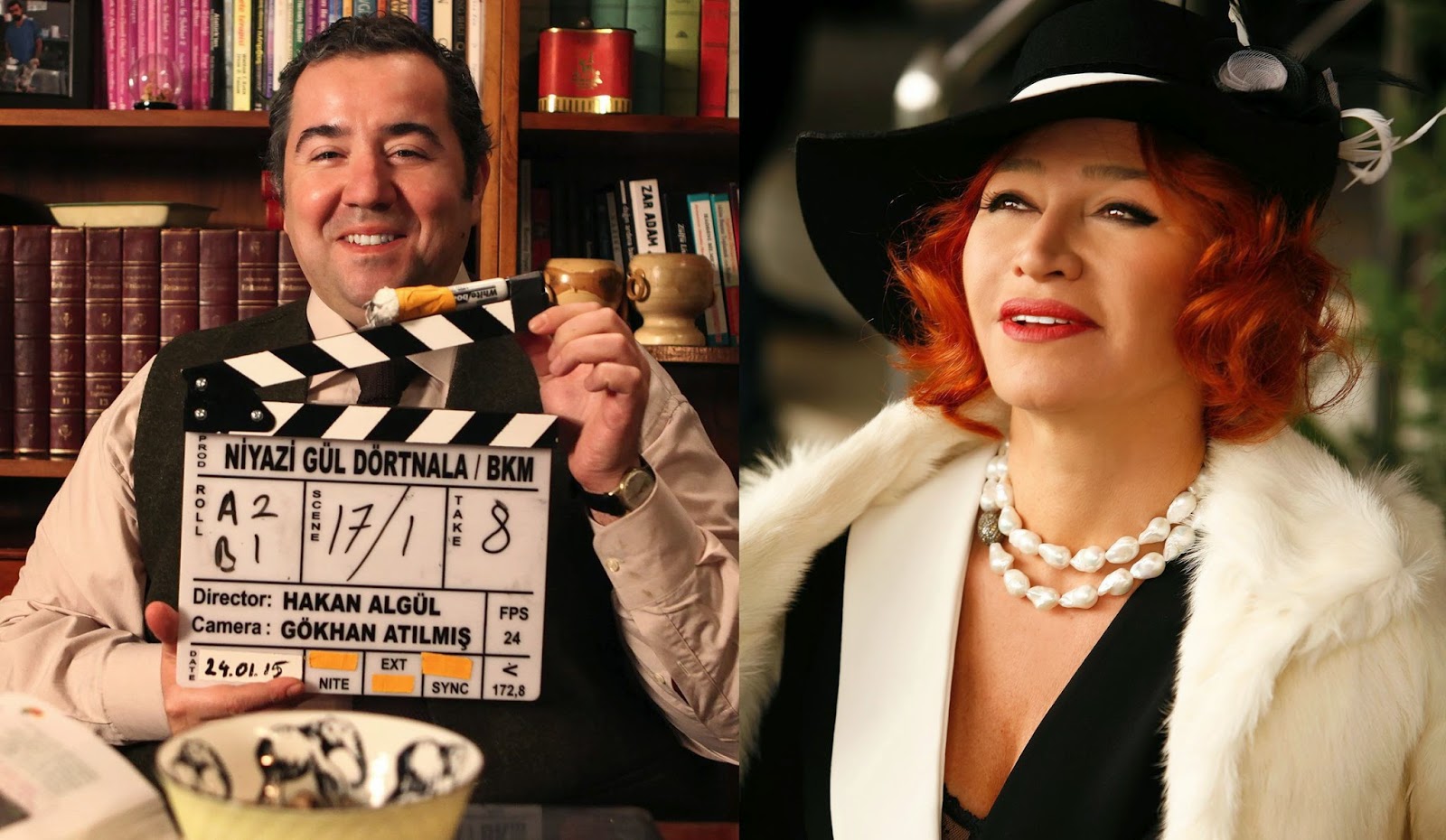
Exclusive interview: Ata Demirer calls Demet Akbağ "fearless", says she will do anything for comedy

CULTURE / FILM

The on-screen pairing of Ata Demirer and Demet Akbağ spells box office gold in Turkey. The duo first worked together in the 2004 hit Vizontele Tuuba. Since then, 42-year-old Demirer, a stand-up comedian-turned-scriptwriter and actor, and actress 55-year-old Akbağ have appeared in five more motion pictures, among them some of the country’s biggest-grossing movies, including comedy hit series Eyyvah, Eyyvah.

Eyyvah Eyyvah 2 was Turkey’s biggest film in 2011, with its predecessor and successor scoring top three annual box office listings. To date, the series has generated receipts in excess of $45 million for the film’s stars, its director Hakan Algül and their studio backer BKM.

That winning combination is back for new comedy Niyazi Gül Dört Nala (Niyazi Gül, The Galloping Vet), which opened the London Turkish Film Festival last week and goes on general release in Britain today.

We caught up with the two lead stars on the red carpet at the film’s world premiere in Istanbul.

Tell us about your new movie Niyazi Gül Dört Nala

Ata Demirer (AD): It’s based on a TV character I created. In the full-length feature film, we see a chapter in the life of Niyazi Gül, a veterinary surgeon who lives in Izmir and teaches university students, while researching into a formula, a new medicine for animals. It’s during this research that he gets caught up in all sorts of dramas.
Demet Akbağ (DA): my character Sultan Şahmerdan is a wealthy landowner with a farm and horses. She’s been around. She crosses swords with an old flame, Rıza Kabakoz, following a horse-racing bet, resulting in her meeting with Niyazi Gül and the plot thickens from there.

What inspired you for this movie - have you had experience with animals or vets?

AD: Yes, with animals. And, as an animal lover, I’ve also been around vets all my life, so I’ve been able to observe their work.
 
A challenging scene with geese, but Ata Demirer says: "Working with humans isn’t that easy either!"
Working with animals wasn’t easy, we’re sure: any memorable moments?

AD: Working with humans isn’t that easy either! If you know how to handle animals, they are not at all difficult to work with.
DA: Obviously animals play a big part in the movie. One of the most challenging scenes is when the geese chase after us. That was hard work. It helped doing the filming on a beautiful sunny day in Izmir.

This is the sixth time you’ve worked together. How does it feel and what do you most admire about each other?

AD: I feel a very high level of happiness [working with Demet]. The thing I love the most about her is she will do anything for comedy. She is fearless.
DA: [Ata] has a very entertaining, very funny personality. We have a lot of fun off-camera, which no doubt you will see when the DVD is released. I love Ata as a person, friend, brother and a colleague. It’s always a pleasure working with him and our friendship has really grown since the first Eyyvah, Eyyvah. It’s a big sister-brother relationship – he was raised as a good young man! And as long as we enjoy it, I’m sure we’ll work together on many more projects.
 
Ata Demirer & Demet Akbağ chalked up a series of box office hits in their 'Eyyvah, Eyyvah' trilogy
Who’s influenced you the most, who do you admire outside Turkey?

AD: I love watching Ben Stiller. Also Woody Allen, Al Pacino, Marlon Brando.

Action-hero films are all the rage in 2015. Would you ever play an action-hero?

AD: No. I’m a comedian.

How do you view the Turkish film industry?

DA: There’s lots of comedy, which brings big box office success. It upsets me that serious dramas with good storylines struggle [to be a commercial success] in Turkey. I’d like to see more of these types of films made. But overall, I’m really pleased about the growing interest in Turkish cinema.

Many older actresses in the UK and USA complain about the lack of quality roles. Is it also true for Turkey?

DA: Yes. We actresses also share the same complaints as Hollywood women. It’s the law of nature. It’s up to us women to write more and better roles for women, and things aren’t going to change until more of us pick up paper and pen. It’s not surprising the sector is dominated by men though: there are many more male scriptwriters and actors than women, so it’s natural they will write roles and create characters based on what they are most familiar with.

What do you love best about London?

DA: Hyde Park
AD: London’s famous for its pubs. Irish pubs, London pub. Pub, pub!

Niyazi Gül, The Galloping Vet goes on general release in select cinemas across London from Friday 15 May.

RELATED ARTICLES: